

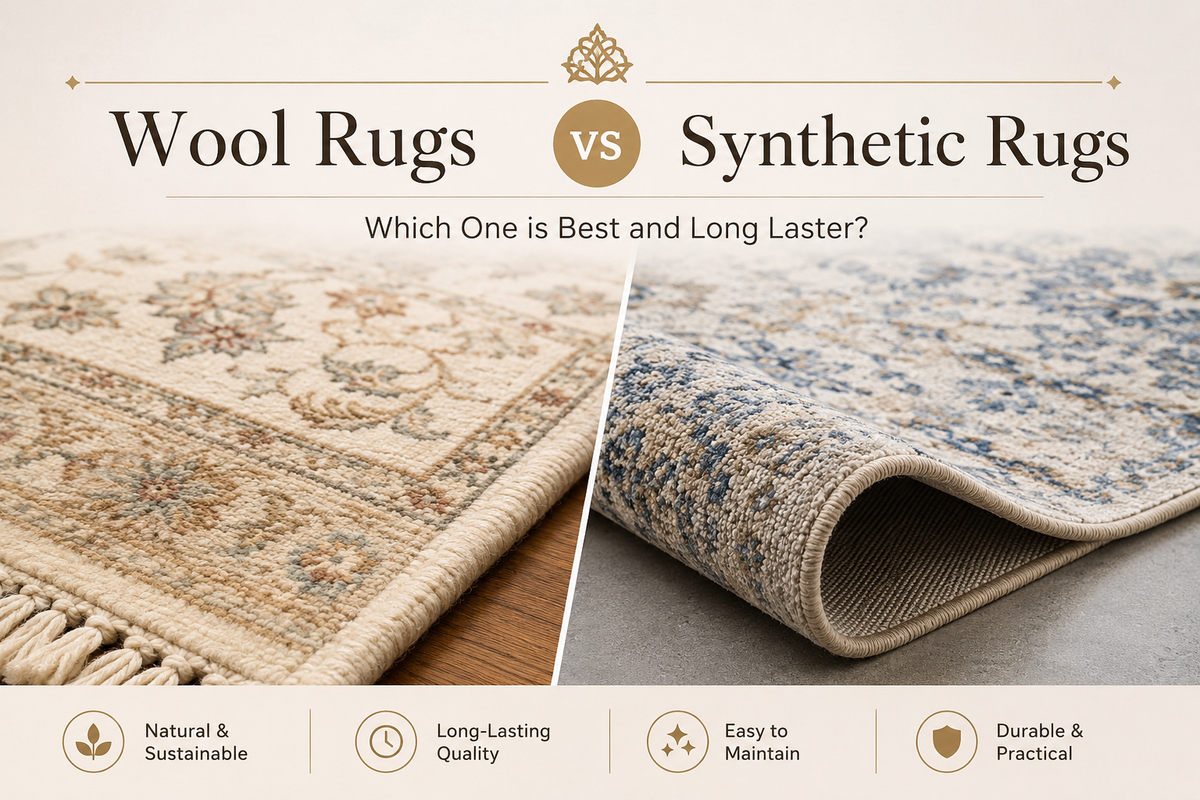
Wool Rugs Vs Synthetic Rugs: Which One is Best and Long Laster?
When you're in a rug aisle (or online) and debating whether to go with a luxurious wool rug or a cheaper synthetic version that looks like wool, the question isn't which looks better on the first day, it's which looks better five years from now. A complete explanation is given here.
What Are Wool Rugs and Why Are Interior Designers Still Recommending Them?
The wool rugs are made from sheep fleece, which is a natural fiber that is renewable and biodegradable, and has been used in the manufacture of rugs for centuries. The crimped structure of wool fibers allows it to retain their shape over the years because the fibers do not stay flat when walked on, but recover to their original shape. It is naturally flame resistant, low in static and absorbs dye more deeply than synthetic fibres, which is why it is continually being recommended for designers.
What Are the Material Synthetic Rugs Made From?
Synthetic rugs are made from petroleum-derived fibers - most commonly polypropylene (olefin), polyester, or nylon. They are designed to replicate the appearance of wool or silk but are far more affordable, and they are also popular for their stain resistance, ease of cleaning and affordability. Nylon is the hardest wearing of the three, making it ideal for heavy foot traffic; polypropylene is the most popular type used in budget and outdoor rugs.
Wool Rugs or Synthetic Rugs - Which One Lasts Longer?
The advantages of wool are huge in terms of longevity. A good wool rug can be expected to last for 20 to 50 years, and many antique hand knotted rugs are still used today. Typically, synthetic rugs last for 3-10 years, during which time fibers begin to become flattened, pill or fray, particularly in high traffic areas, heat, or sunlight. When you want something that you're not going to have to replace for 10 years, the answer is definitely wool.
How Long Handmade Wool Rugs Last Versus Machine Made Synthetics?
Handmade wool rugs that are hand-knotted or hand-tufted by expert rug makers are often more durable than machine-made wool rugs, as the hand-tied construction provides additional durability in addition to the natural durability of the wool fibers. Unlike natural rugs, however, which are designed to last for decades, machine-made synthetic rugs are designed to be affordable and consistent.
Are Natural Fiber Rugs Better for Allergies and Air Quality than Synthetic?
Natural fiber rugs, such as wool rugs, are less conducive to dust mites, and don't give off the volatile organic compounds (VOCs) that cause the "new carpet" smell of some new synthetic rugs. However, wool is not hypoallergenic for everyone; some individuals who are sensitive to lanolin will react to it. Wool is usually a better option if you are most concerned with off-gassing and dust mites; synthetic may be a better option if you are most sensitive to wool or lanolin.
When It Comes to Area Rugs - Are Wool or Synthetic Rugs Softer?
The natural crimp and loft of the fiber makes Wool area rugs the softer, more luxurious choice underfoot. When you start using new wool, it may be a little scratchy because of the lanolin, but it becomes much softer after the initial few washings. Polypropylene is a synthetic fiber that has a soft feel to it right away, but a smoother, slightly plasticky feel that doesn't quite match the softness of wool, even when it is made into a higher pile.
Which Is the Best Material For a High Traffic Home That Has Kids and Pets?
If you have pets, children, or frequent spills in your home, there is no “best rug material” as it is actually dependent on the room. Wool is naturally resistant to crushing and will conceal everyday wear very well, making it a good option for the busy living room and hallway. Synthetic rugs, especially nylon and polypropylene, are more resistant to stains and moisture and are easier to spot clean or hose down, making them the better choice for mudrooms, playrooms, and outdoor or covered patio areas.
What Does a Side by Side Comparison of Wool Rugs vs Synthetic Rugs Reveal?
|
Feature |
Wool Rugs |
Synthetic Rugs |
|
Average lifespan |
20–50+ years |
3–10 years |
|
Durability |
Naturally springy; resists crushing and matting |
Can flatten, pill, or fray under heavy use |
|
Softness/feel |
Plush, warm, natural crimp texture |
Soft but slightly plasticky feel |
|
Stain/moisture resistance |
Moderate; needs wool-safe cleaners |
High; easy to spot-clean, some are washable |
|
Best for |
Living rooms, bedrooms, formal spaces |
Outdoor areas, high-moisture rooms, budget buys |
|
Upfront cost |
Higher (hand-knotted wool costs more) |
Lower ($150–$300 for an average 8x10) |
|
Long-term value |
Higher cost-per-year over its lifespan |
Lower upfront but replaced more often |
|
Eco-friendliness |
Renewable, biodegradable |
Petroleum-based, not biodegradable |
|
Allergy/VOC profile |
Low dust mite support, low off-gassing |
Can off-gas VOCs when new |
|
Color retention |
Absorbs dye deeply; colors stay rich longer |
Can fade or look flatter over time |
Are Wool Rugs Worth the Extra Cost in the Long Run?
Yes, wool rugs are a better value for most homes, if you consider the cost per year of use, not just the cost. A wool rug which lasts 30 years is much less expensive per year than a synthetic rug that needs to be replaced three or four times in that time - and it doesn't fade, shape or resale as well. The only exception to this is if a rug is going to be exposed to moisture, soiling, or being exposed to the outside elements, in those cases, it is more practical and economical to use a synthetic rug even if it doesn't last as long as the math suggests.
Will the Extra Cost of a Wool Rug Pay Off in the Long Run?
Yes, for most families, wool rugs are more valuable than their higher initial price tag, if you consider the value of the rug over the number of years it will be used. A wool rug that lasts 30 years is more cost-effective over the course of that time than replacing a synthetic rug every 3 or 4 years - and it holds its color, shape and resale value much better throughout the years. The exception to this is in spaces where a rug will be exposed to constant moisture, heavy traffic, or weather, where a long-lasting synthetic rug is the better, more practical, and economical choice, even though it might not last as long as an all-natural rug.
Therefore, Wool or Synthetic – Which Rug Should You Buy?
If you're looking for a rug that will last a long time, be soft, and feel natural, you should opt for a wool rug, particularly for living rooms, bedrooms, and formal rooms. If you're looking for a lower initial price, maintenance, or an outdoor, high moisture, or short-term rug, select a synthetic rug. A lot of homeowners end up with both: wool rugs in the areas that they wish to invest in, and synthetic rugs in the areas where it makes sense because there is a lot of mess.
Looking for a premium wool rug in the UAE?
Explore Aiba World's handmade wool rug collection.
FAQs About Wool Rugs vs Synthetic Rugs
Do wool rugs life is longer than synthetic rugs?
Yes, wool rugs typically last 20 to 50 years or more with proper care, while most synthetic rugs last 3 to 10 years before showing significant wear, flattening, or fading.
How many years should a good wool rug last?
A well-maintained, high-quality wool rug - especially a hand-knotted one - can realistically last several decades, with many antique wool rugs still in use after 50+ years.
Do wool rugs shed, and is that normal?
Some shedding is normal in new wool rugs, particularly hand-tufted ones, as loose fibers from the manufacturing process work their way out. This typically settles down significantly within the first few months of regular use and vacuuming.
Which is more durable, wool or polypropylene rugs?
Wool is generally more durable over the long term because its fiber naturally resists crushing and holds its shape for decades. Polypropylene performs well against stains and moisture but tends to flatten and wear out faster under heavy foot traffic.
Are wool rugs worth the extra cost compared to synthetic rugs?
For most indoor living spaces, yes - wool's much longer lifespan usually makes it cheaper per year of use than repeatedly replacing a synthetic rug, on top of its added softness and better color retention over time.


%20and%20debating%20whether%20to%20go%20with%20a%20luxurious%20wool%20rug%20or%20a%20cheaper%20synthetic%20version%20that%20looks%20like%20wool,%20the%20question%20isn't%20which%20looks%20better%20on%20the%20first%20d...)