

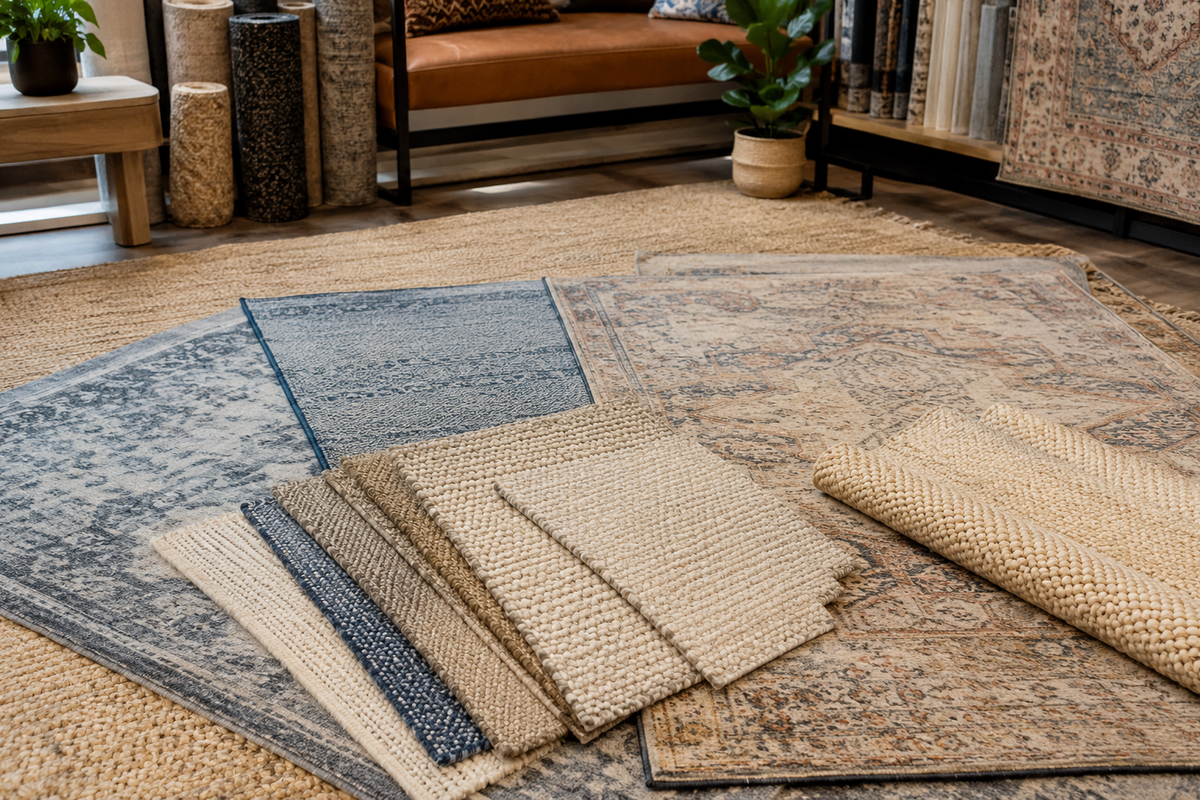
Area Rugs Buying Guide: What Materials, Weaves, and Features Should You Look for?
Buying a rug sounds simple until you're standing in a showroom (or scrolling through fifty browser tabs) staring at wool, jute, silk, and synthetic blends that all claim to be "the best." Add in words like hand-knotted, flatweave, and tufted, and it starts to feel like you need a design degree just to pick something for your living room floor.
You don't. You just need to understand a handful of things: what a rug is made of, how it's woven, where it's going in your home, and how much wear it needs to survive. This guide walks through all of it, in plain language, so you can shop with confidence instead of guesswork.
There's an old design truth worth keeping in mind before you buy anything: a rug is one of the few pieces of decor that touches every part of a room - it grounds the furniture, sets the color palette, and quietly absorbs sound and footsteps every single day. It's worth getting right.
What Are the Different Types of Rugs for an Area?
Not all rugs are built the same way, and the "type" of rug you choose affects everything from how it feels underfoot to how long it lasts.
What Are the Most Popular Types of Rugs for Modern Homes?
In most homes today, you'll come across a handful of recurring styles: hand-knotted rugs (prized for their craftsmanship and longevity), hand-tufted rugs (a more affordable, faster-to-produce alternative), flat-weave or kilim-style rugs (thin, reversible, and casual), and machine-made rugs (budget-friendly and widely available in countless patterns). Shag rugs, jute and sisal rugs, and layered "rug-on-rug" looks have also become popular for adding texture without overwhelming a space.
What Is the Difference Between Hand-Knotted, Hand-Tufted, and Flatweave Rugs?
This is where a lot of buyers get confused, so here's the short version:
Hand-knotted rugs are made by tying individual knots onto a loom, one at a time, by hand. It's slow, skilled work, and it's why a good hand-knotted rug can last for generations.
Hand-tufted rugs are made faster, using a tufting gun to punch yarn through a fabric backing, which is then glued and finished. They look similar to hand-knotted rugs at a glance but are less durable and more affordable.
Flatweave rugs have no pile at all - the yarns are woven flat, like a woven basket. They're thin, lightweight, reversible, and great for casual or high-traffic spaces.
If you're comparing two rugs and one feels noticeably thicker, heavier, and has a woven (not glued) backing, it's likely the hand-knotted one.
| Read More: Handmade vs. Machine-Made Rugs: Which One Should You Choose? |
Which Types of Rugs Are Best for Living Rooms, Bedrooms, and Dining Areas?
Living rooms tend to benefit from hand-knotted or hand-tufted wool rugs that can handle daily use and still look plush. Bedrooms are a great place for softer, higher-pile rugs since comfort matters more than traffic resistance. Dining areas are best served by flatweave or low-pile rugs, since chairs sliding in and out can snag a plush pile and crumbs are far easier to clean off a tighter weave.
What Is the Best Rug Material for Different Areas of the Home?
The "best" rug material really depends on the room, the foot traffic, and how much maintenance you're willing to do.
What Is the Best Rug Material for a Living Room?
Wool is usually the top pick for living rooms. It's naturally durable, resists stains reasonably well, feels soft underfoot, and holds color beautifully. It's also naturally flame-retardant and has a bit of built-in resilience, meaning it bounces back from furniture indentations over time.
Which Rug or Carpet Material is Best for High-Traffic Areas?
Wool blends, synthetic fibers like nylon, or flatweave rugs like cotton and jute rugs are perfect for entryways, hallways, and family rooms. These handle repeated foot traffic, dirt, and moisture better than the natural fibers material like silk.
Is Wool the Best Material for an Area Rug?
For most everyday situations, yes - wool checks the most boxes: durability, softness, stain resistance, and longevity. It isn't cheap, but it tends to be the material design professionals reach for first when a rug needs to work hard and still look good doing it.
Are Cotton and Synthetic Rugs Good Choices for Everyday Use?
Absolutely, especially if budget or easy maintenance is a priority. Cotton rugs are breathable, machine-washable in smaller sizes, and great for casual spaces like kids' rooms. Synthetic rugs (polypropylene, nylon, polyester) are budget-friendly, fade-resistant, and increasingly good at mimicking the look of natural fibers - making them a smart pick for outdoor areas, playrooms, or homes with pets.
What Does a Rug Materials Guide Say About Different Rug Fibers?
Every rug material comes with trade-offs. None of them is "perfect" - the right one depends on what you're solving for.
Which Rug Material Is the Most Durable?
Wool consistently ranks as the most durable natural fiber for everyday rugs, followed closely by durable synthetics like nylon. Silk, by contrast, is beautiful but delicate - it's better suited to low-traffic, decorative spaces than a busy hallway.
Which Rug Materials Are Easiest to Clean and Maintain?
Synthetic fibers and flatweave cotton rugs are generally the easiest to clean, since many can be spot-cleaned or even machine-washed if small enough. Wool is fairly easy to maintain too, thanks to its natural stain resistance, but it should be professionally cleaned occasionally to preserve its fibers. Silk requires the most care and is best kept away from spills altogether.
How Do You Choose the Right Rug Material for Your Lifestyle?
Think about your actual daily life, not your Pinterest board. Have kids or pets? Lean toward wool blends or synthetics. Live alone in a low-traffic apartment? Silk or a delicate weave can work beautifully. Renting and need something budget-friendly and easy to replace? Synthetic or cotton flatweaves are the practical choice.
What Are the Pros and Cons of Different Rug Materials?
Wool – Durable, soft, stain-resistant; higher price point.
Cotton – Breathable, affordable, washable; less durable long-term.
Silk – Luxurious sheen, elegant look; delicate and high-maintenance.
Synthetic (nylon, polypropylene) – Affordable, easy to clean, fade-resistant; can feel less premium and isn't always eco-friendly.
How Do Different Rug Weaves Affect Quality and Durability?
The material tells you what a rug is made of. The weave tells you how it was made - and that has just as much impact on how it performs.
What Is a Hand-Knotted Rug and Is It Worth Buying?
A hand-knotted rug is woven knot by knot on a loom, often taking weeks or months to complete depending on size and detail. It's worth the investment if you want a rug that will genuinely last decades, develop a beautiful patina, and hold resale or heirloom value. It's an investment piece, not an impulse buy.
What Is a Flatweave Rug and Where Should You Use It?
Due to low-pile or no-pile flat-weave rugs are thin, lightweight, and often reversible. Low-pile rugs and carpets are work well in dining rooms, kitchens, entryways, and outdoor-adjacent spaces where spills and heavy use are a given.
What Is a Hand-Tufted Rug and How Does It Compare with Hand-Knotted Rugs?
Hand-tufted rugs are made with a tufting gun and a glued backing, which makes them faster and cheaper to produce than hand-knotted rugs. They offer a similar look for a fraction of the price, but the glued backing can crack or shed over time, and they generally don't last as long.
Which Rug Weave Is Best for High-Traffic Areas?
Flatweaves and tightly hand-knotted wool rugs perform best under heavy traffic. Their construction resists crushing and matting far better than plush, deep-pile weaves, which tend to flatten out in walkways.
What Should You Look for When Buying Area Carpets?
Once you've narrowed down material and weave, a few practical checks will save you from a costly mistake.
What Size Area Carpet Should You Buy for Your Room?
As a rule of thumb, a rug should be large enough that at least the front legs of your major furniture pieces sit on it - this visually anchors the room instead of making the rug look like a stray island in the middle of the floor.
How Should an Area Carpet Fit Under Your Furniture?
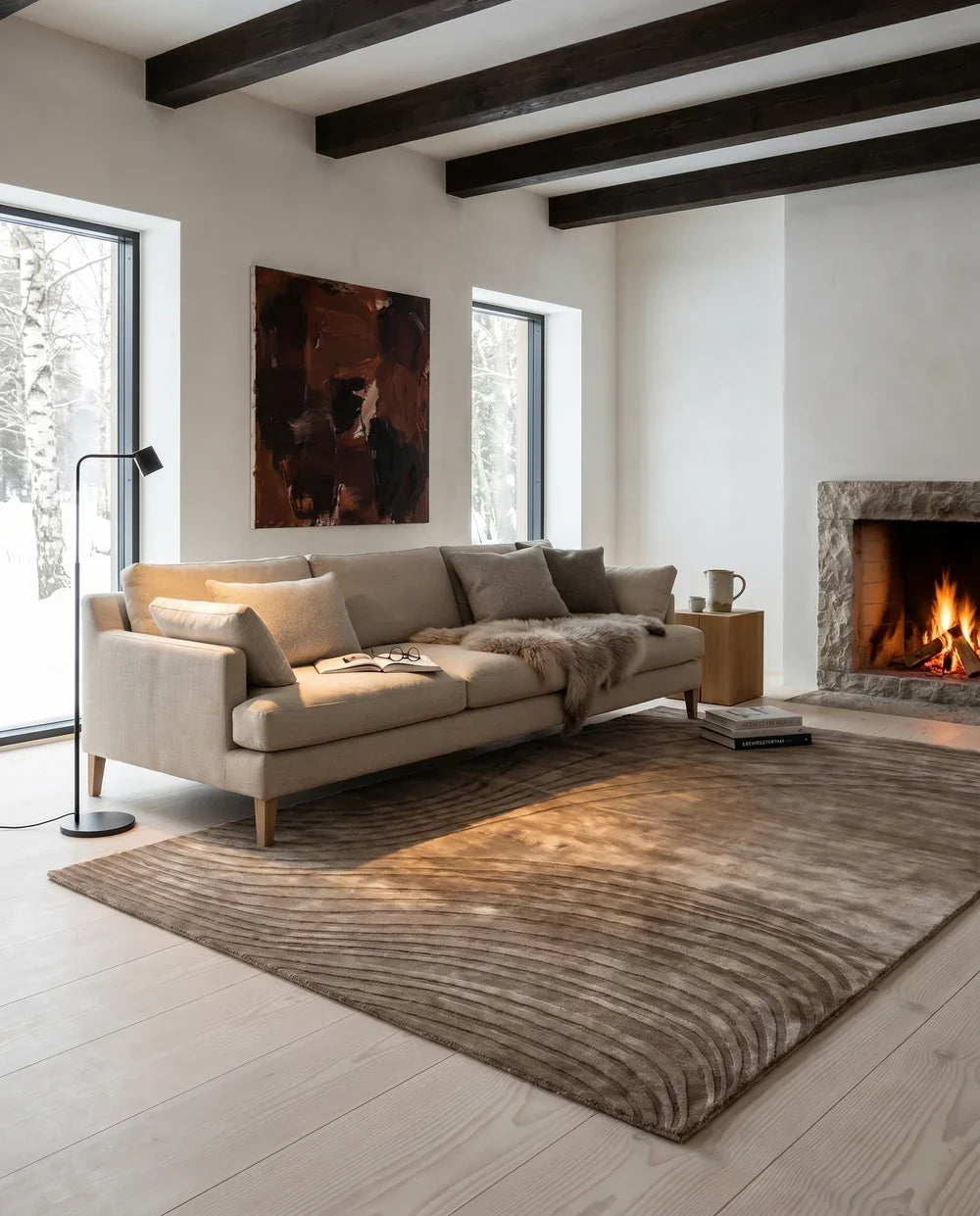
In living rooms, aim to have all four legs of your sofa and chairs on the rug for a fully grounded look, or just the front legs for a lighter touch. In dining rooms, the rug should extend at least 24–30 inches beyond the table on all sides so chairs stay on the rug even when pulled out.
What Rug Material and Weave Should You Choose for Area Carpets?
Match the material to the room's traffic and the weave to your maintenance tolerance. High-traffic, high-mess areas call for durable synthetics or tight flatweaves; quieter, low-traffic spaces can support more delicate silk or plush wool.
How Do You Know if an Area Carpet Is High Quality?
Flip it over. A high-quality rug has a tight, even weave visible on the back, consistent knot density (for hand-knotted pieces), and no fraying edges. Run your hand across the surface - good wool feels dense and slightly springy, not flat or plasticky.
What Are the Best Carpets for Living Area Spaces?
The living room usually takes the most punishment of any room in the house, so this deserves its own closer look.
What Are the Best Carpets for Living Area Spaces With Heavy Foot Traffic?
Durable wool rugs, wool-synthetic blends, and tightly woven flatweaves consistently perform best. They resist crushing, hide dirt better than lighter, plush piles, and stand up to daily use from both people and pets.
Which Rug Materials Work Best for Living Areas?
Wool remains the gold standard for its balance of comfort and resilience. Synthetic blends are a smart runner-up if budget or easy cleaning is the priority, especially in homes with young kids.
What Size Rug Is Best for a Living Area?
Most living rooms look best with a rug that extends at least a few inches beyond the front edge of the seating arrangement, big enough to unify the sofa, chairs, and coffee table into one visual grouping rather than isolating each piece.
How Should You Position Carpets for Living Area Furniture?
Center the rug with the seating arrangement, not the room itself - meaning if your sofa is offset toward one wall, the rug should follow it rather than sit dead-center in the floor plan.
How Do You Choose the Right Rug Size for Your Room?
Measure your room and your furniture layout before you shop, not after. Leave roughly 12–18 inches of exposed floor between the rug's edge and the wall in most rooms - this creates a framed look rather than a wall-to-wall carpet feel. For bedrooms, a common approach is to have the rug extend at least 18–24 inches beyond the sides and foot of the bed, so your feet land on rug, not cold floor, when you get up. When in doubt, size up rather than down - an undersized rug is one of the most common (and most noticeable) decorating mistakes.
Which Types of Rugs Are Best for High-Traffic Areas?
Entryways, hallways, staircases, and family rooms need rugs built for punishment. Look for:
-
Low or Flat Pile - easier to vacuum and less prone to crushing
-
Durable Fibers - wool, wool blends, or performance synthetics like nylon and polypropylene
-
Darker or Patterned Designs - these hide dirt and wear far better than solid pale colors
- Tight, Dense Weaves - loose weaves loosen further under repeated pressure
If you have pets, look specifically for stain-resistant synthetic blends or wool rugs treated for spill resistance - they'll save you a lot of frustration.
What Should You Consider Before Buying an Area Rug?
Before you check out, run through this quick mental checklist:
-
Room and Traffic Level - Is this a quiet bedroom or a busy hallway?
-
Material - Does it match your lifestyle (pets, kids, allergies, maintenance tolerance)?
-
Weave and Construction - Are you buying an heirloom piece or a practical, replaceable one?
-
Size - Does it properly anchor your furniture, with the right amount of floor showing?
-
Budget Versus Longevity - A cheaper rug replaced every two years can cost more over a decade than one well-made rug bought once.
-
Care Requirements - Are you prepared for professional cleaning, or do you need something washable?
A rug is rarely a spontaneous purchase you should regret. Taking twenty extra minutes to think through these points is the difference between a rug you love for a decade and one you're replacing next year.
What Are the Most Frequently Asked Questions About Area Rugs?
Is a more expensive rug always a better rug?
Not necessarily. Price often reflects craftsmanship and material quality, but a well-made synthetic rug can outperform a poorly made natural-fiber one in the wrong setting. Buy for the room, not just the price tag.
Can I put a wool rug in a high-humidity room?
It's not ideal. Wool can hold moisture, which may lead to mold in damp environments like bathrooms. Synthetic or flatweave options are safer there.
Do natural fiber rugs need a rug pad?
Yes, almost always. A rug pad prevents slipping, adds cushioning, protects your flooring, and actually extends the life of the rug itself by reducing friction against hard floors.
How often should an area rug be professionally cleaned?
For rugs in moderate to high-traffic areas, once every 12–18 months is a reasonable rhythm. Low-traffic or decorative rugs can go longer between deep cleans.
A Few Universal Truths About Buying a Rug
Some things about rugs don't change no matter how many trends come and go:
- A rug that's too small will make an entire room feel off, even if every other design choice is perfect.
- The back of a rug tells you more about its quality than the front does - always check the construction, not just the pattern.
- No rug is completely stain-proof or crush-proof - every material is a trade-off between beauty, durability, and price.
- Natural light changes how a rug color looks - always view a sample in your actual room before committing to a large piece.
- A good rug pad is not optional - it's cheap insurance against slipping, wear, and flooring damage.
A Couple of Thoughts Worth Sitting With
Design thinking around textiles and craftsmanship has never really changed, even as materials and machines have. British designer and craftsman William Morris put it simply: "Have nothing in your house that you do not know to be useful, or believe to be beautiful." It's a fitting way to think about a rug - a piece that's both functional and, if chosen well, one of the most beautiful things in the room.
Legendary interior designer Elsie de Wolfe, often credited with founding modern interior design as a profession, once said something close to: "I am going to make everything around me beautiful - that will be my life." A good rug is a small, everyday way of doing exactly that.
And as many rug artisans and weavers have said in different words over generations - a handmade rug isn't just a floor covering, it's a record of hours, skill, and tradition woven into something you'll walk across every day without a second thought. That's worth pausing on the next time you're comparing a mass-produced option against something made by hand.
(A note on the quotes above: I don't have live access to verify sources, so it's worth double-checking exact wording and attribution before publishing.)
Choosing a rug doesn't have to be complicated once you understand the basics: match the material to your lifestyle, the weave to your traffic level, and the size to your furniture. Do that, and you'll end up with a rug that looks intentional - not accidental - for years to come.

%20staring%20at%20wool,%20jute,%20silk,%20and%20synthetic%20blends%20that%20all%20claim%20to%20be%20%22the%20best.%22%20Add%20in%20wo...)