
Layer Your Rugs, Ideally, Just Like an Interior Designer
Rugs are an ideal way to add a sense of sophistication to your room.
Ever step into a magnificently designed house and ask yourself why it feels so cozy, stylish, and put together? Layered rug styling is a secret art that many designers make use of. It's a basic design tip that will give your room some sense of depth, texture, warmth, and personality.
You may have wondered how to layer rugs without creating a cluttered look in your space, and you've come to the right place. Rug layering can make a dramatic difference in your interiors, whether you're decorating a small apartment, sprucing up your bedroom, or updating your living room.
Let's look at the ways that the interior designers have approved for making layered rugs look goal-oriented, balanced, and graceful.
Have you ever walked into a home that was beautifully designed and thought to yourself, "How is this home so cozy, so chic, so put together? Many designers have a secret that they use, which is to layer rugs. It's a basic design tip that can help to give any room depth, texture, warmth, and personality.
Are you looking for some tips on how to layer rugs without it looking cluttered? You've come to the right place! Rug layering can make a big difference in your interior, whether you are decorating a small apartment, sprucing up your bedroom, or updating your living room.
Let's explore the designer-approved methods for creating intentional, balanced, beautiful layered rugs. The popularity of rug layering is growing rapidly.
Why is rug layering becoming a popular trend?
Let's start with the most asked questions:
Does layering rugs still exist?
Absolutely!
In fact, layered rugs are among the most popular interior design trends, as they can help create a customized look. Designers commonly use rug layering to:
- Add visual interest
- Identify various areas of a room
- Add color and pattern
- Use a scale of larger spaces to make them more inviting.
- Refresh a room without getting rid of existing rugs.
The best part? It's not a costly redesign to get the look.
How Designers Layer Rugs?
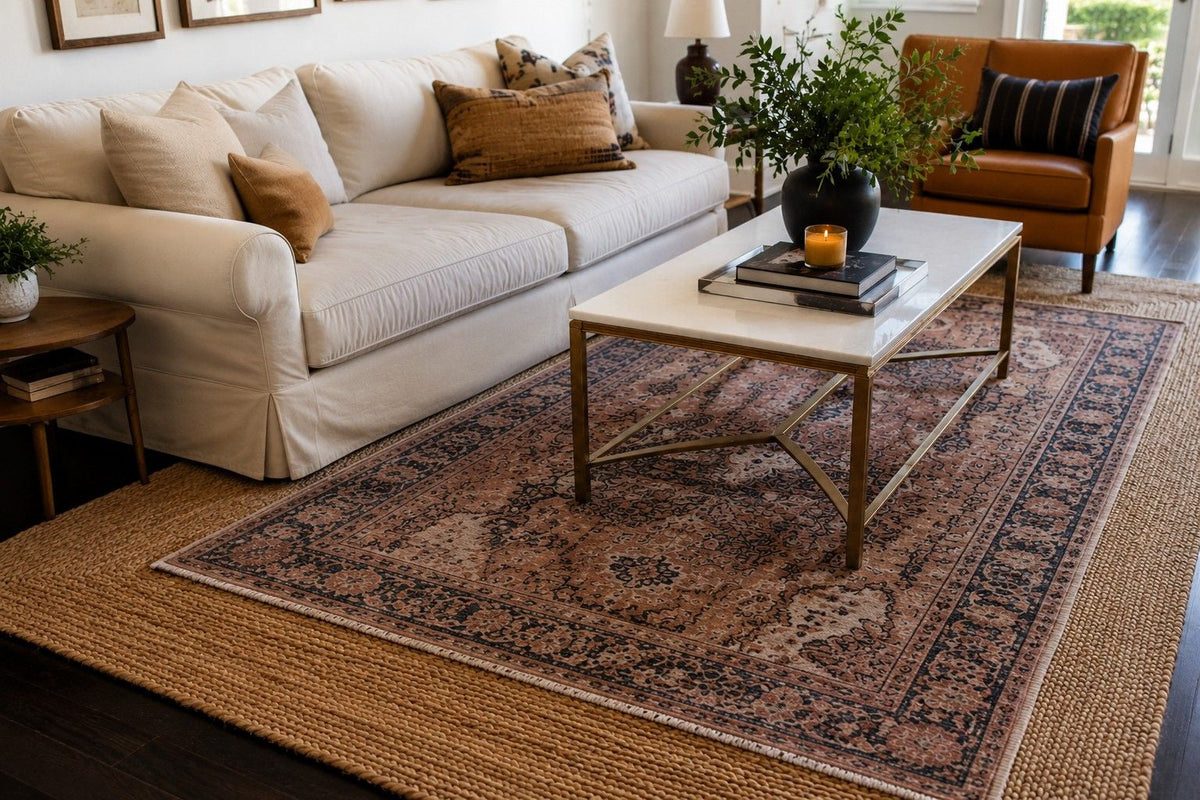
The main rule of professional designers is to begin with a larger neutral base rug and then top it with a smaller statement rug.
The base rug provides structure, the top rug adds personality.
Some popular combinations include:
- Jute rug and patterned wool rug.
- Neutral rug with a colorful vintage rug.
- A large sisal rug and an animal print accent rug.
- A solid rug and a patterned rug with geometric designs.
The aim is to provide contrast but not discord. All these combinations lead to achieving visual distinction while maintaining the harmony.
The basis of successful layering rugs is to select an appropriate bottom rug. Natural fiber rugs are most often preferred because they provide a certain level of texture without overpowering the entire space.
Popular examples of natural fiber rugs are jute, sisal, and seagrass rugs. Flatweave rugs also fall into this category, as they're typically made from natural fibers as well.
Because natural fiber rugs are neutral in colour, they're great for letting the top rug become the focal point of your room.
If you're uncertain what size rug to buy, consult a rug size guide prior to making your purchase. An appropriate bottom rug will make all the difference when layering.
The fun part comes next: selecting a smaller area rug to layer on top of the base rug. The top rug should introduce some combination of:
- Colour
- Pattern
- Texture
- Artistic character
For example, you might consider vintage-inspired rugs (midcentury modern, Moroccan, Persian), geometric rugs, or textured wool rugs for the top layer.
The layered look created when adding a top rug over a base rug is one that creates depth in a space and instantly enhances its design appeal.
What rugs look great together?
Many people are concerned about mixing various styles of rugs in their home decor. Designers often recommend the following combinations:
Jute + Wool
This is one of the most popular combinations. Homeowners often ask: Is it OK to layer a jute rug on top of a wool rug? Absolutely! They look amazing together! The coarse texture of jute contrasts nicely with the soft texture of wool, providing a warm look with an air of sophistication.
Cotton + Vintage Pattern
Soft cotton rugs work great as a base under a colourfully patterned vintage-style rug.
Neutral + Bold Pattern
Using a neutral colour base rug (beige or cream) and adding a bold patterned area rug creates a balanced, designer-inspired look.
Texture + Texture
A textured rug over a textured rug creates visual interest, even if the rugs have similar-coloured fibres.
Rugs can be layered in a living room, right?
Yes, absolutely!
The ideal area for experimenting with layers of rugs?
The living room! Layer rugs using the following steps:
- Place a large neutral-colored rug beneath all pieces of the furniture.
- Select one smaller accent rug that will sit slightly off-center from the large rug (e.g., to one side);
- Angle the smaller accent rug over the top of the larger rug to provide a more relaxed and modern appearance; and
If you have an open-concept home and you wish to define your seating group, this would work very well in those types of homes as well.
Check out more living room ideas using rugs and how to use layered rugs to create a warm environment.
Bedroom spaces can experience extreme benefits from layers of rugs within the space, since bedrooms oftentimes require warm and soft textures.
Layered rugs within the bedroom design process:
Many designers use a classic rug layering technique:
- A large neutral area rug is placed underneath the bed.
- The addition of a smaller decorative rug at least partially underneath the lower 1/3 of the bed.
- This creates visual balance & provides a soft landing for your feet when you get out of bed.
Another place for layered rugs inside a bedroom is on either side of the bed, again providing warmth and texture.
Handmade rugs with varied textures & craftsmanship often provide additional warmth & comfort and enhance the overall look and feel of the bedroom.
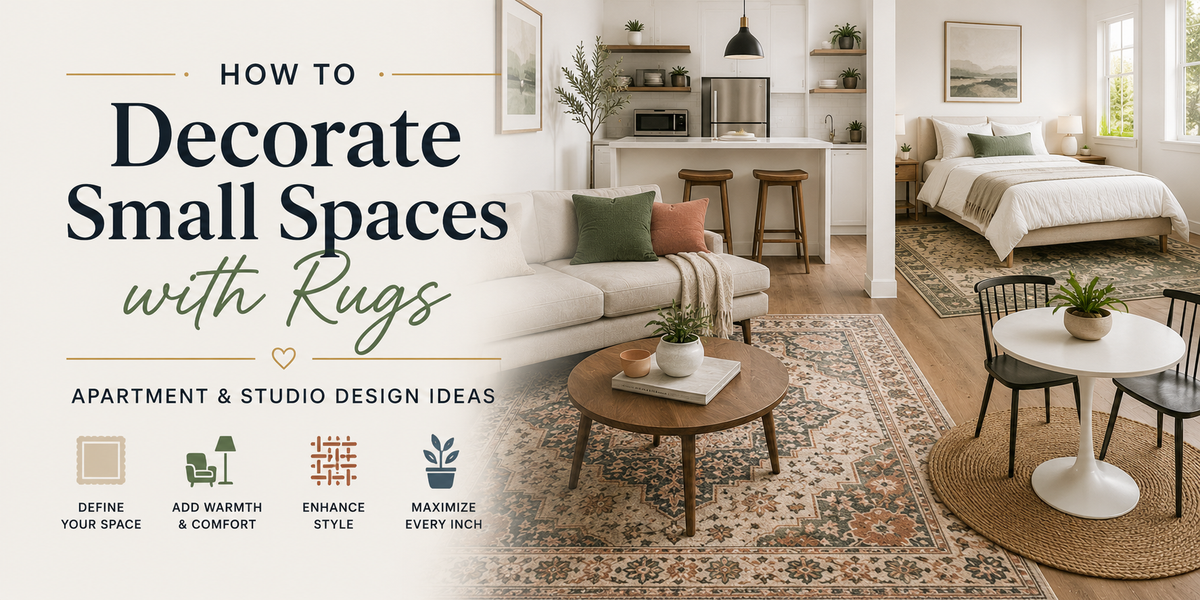
Layered Rugs For Small Spaces
Many people think that layering is only suitable for big houses.
That's not true.
Rugs for small areas
Layering can actually help to give a small room a more purposeful and chic appearance.
A few tips:
- Stick to lighter colors.
- Don't use too large rugs.
- Use subtle patterns.
- Keep proportions balanced.
Layering is a great way to add depth in smaller rooms, without adding more furniture or decor.
The outcome is a well-designed room that doesn't feel cluttered.
What Size Rugs Should Be Layered?
One of the most crucial choices when you're learning how to layer area rugs is what to use as a base. The first and most critical choice in learning how to layer area rugs is what to use as a base.
How to layer rugs?
As a general rule:
The bottom rug should be much bigger.
The top rug should be roughly 1/3 to 2/3 the size of the bottom rug.
Examples:
|
Base Rug |
Top Rug |
|
8' x 10’ |
5' x 7' |
|
9' x 12' |
6' x 9' |
|
6' x 9' |
4' x 6' |
The layered effect is achieved by leaving a border around the top of the rug.
Knowing the dimensions of area rugs can assist in making sure the proportions are balanced when choosing sizes.
How to Layer Rugs on Carpet?
Another frequently asked question is: How to layer rugs on carpet?
The answer is quite straightforward.
Rugs can be used to add interest and texture to a plain floor if you have wall-to-wall carpeting.
Here are some suggestions:
- Opt for rugs that have different textures.
- Do opt for bold patterns to complement neutral carpet.
- Place a rug pad under to stabilize.
- Don't use very thin rugs.
This is a great method to use in rental homes where carpet replacement is not an option.
Interior Design Tips for a Flawless Layered Look: Rug Tips for a Perfect Layered Look
These are some tips from the experts for using layered rugs to create a professional style:
Combine Textures, NOT Chaos!
There are a variety of textures that will add depth, but too many can be overwhelming.
Let One Rug Lead
Select a hero rug and have a second rug to hold it up.
Keep a Consistent Color Story
Contrasting rugs ought to have a minimum of one color family in common.
Do NOT go for the perfect symmetry!
Rugs that are slightly off-center seem to be more natural and designer-y.
Prioritize Quality
Investing in a durable wool rug, natural fibers, or an artisan-made rug can really take the room to the next level.
Conclusion
One of the simplest methods to design an interior without having to completely change it is learning how to layer rugs. From using a large rug in the living room to a small rug in the bedroom for a relaxed retreat, to layered rugs for small spaces, the right size, texture, and pattern can make a huge difference in your home.
Choose a neutral base, then add a statement rug, and don't be afraid of mixing materials such as jute, cotton, and wool. The versatility of layered rugs is what makes them so beautiful: there are no hard-and-fast rules; there's just creative possibilities.
So if you think your room is missing something, try adding rugs. It could be the final piece that ties your whole area together.
FAQ’s
How do interior designers layer rugs in a living room?
Interior designers usually put a big neutral rug under furniture and then put a smaller patterned or textured rug over the top to create depth, contrast, and visual interest.
What types of rugs work best for layering?
Natural fiber rugs, such as jute or sisal, are ideal as a base layer, while wool, cotton, vintage, or patterned rugs serve to add texture, color, and personality.
Can you layer rugs over carpet?
Yes, there is a technique of layering rugs over carpet. Use contrasting textures or patterns, and a rug pad to prevent the top rug from slipping.
What size rugs should you use when layering?
The top rug should overlap the bottom rug by 1/3 to 2/3, and the bottom rug should be slightly larger.
Is rug layering still a popular interior design trend?
Yes, rug layering is still in style as it brings warmth, texture, dimension, and a personalized designer touch to any room.